

Dry eyes are a common part of recovery after laser eye surgery. For many patients, the feeling is mild and settles as the eye heals. For others, dryness can affect comfort, reading, screen use, driving and vision quality during the first few weeks or months. Patients looking into local care often benefit from choosing a specialist service that provides assessment, treatment planning and follow-up in one place.
After LASIK, ReLEx SMILE®, PRESBYOND® Laser Blended Vision or Advanced Surface Ablation/LASEK, the eye needs time to settle as vision and comfort stabilise. Understanding how to manage dry eyes after laser eye surgery can make this stage more comfortable, especially while tear production, blinking patterns and corneal sensitivity return to normal.
The good news is that dry eye symptoms can usually be managed with the right aftercare. Lubricating drops, sensible screen habits, hydration, protection from wind and regular follow-up appointments all support healing. At Anderson Eye Care, aftercare is built around careful assessment, clear guidance and access to specialist advice, so patients are not left guessing about their recovery.
Why Dry Eye Can Happen after LASIK: Corneal Nerve and Tear Film
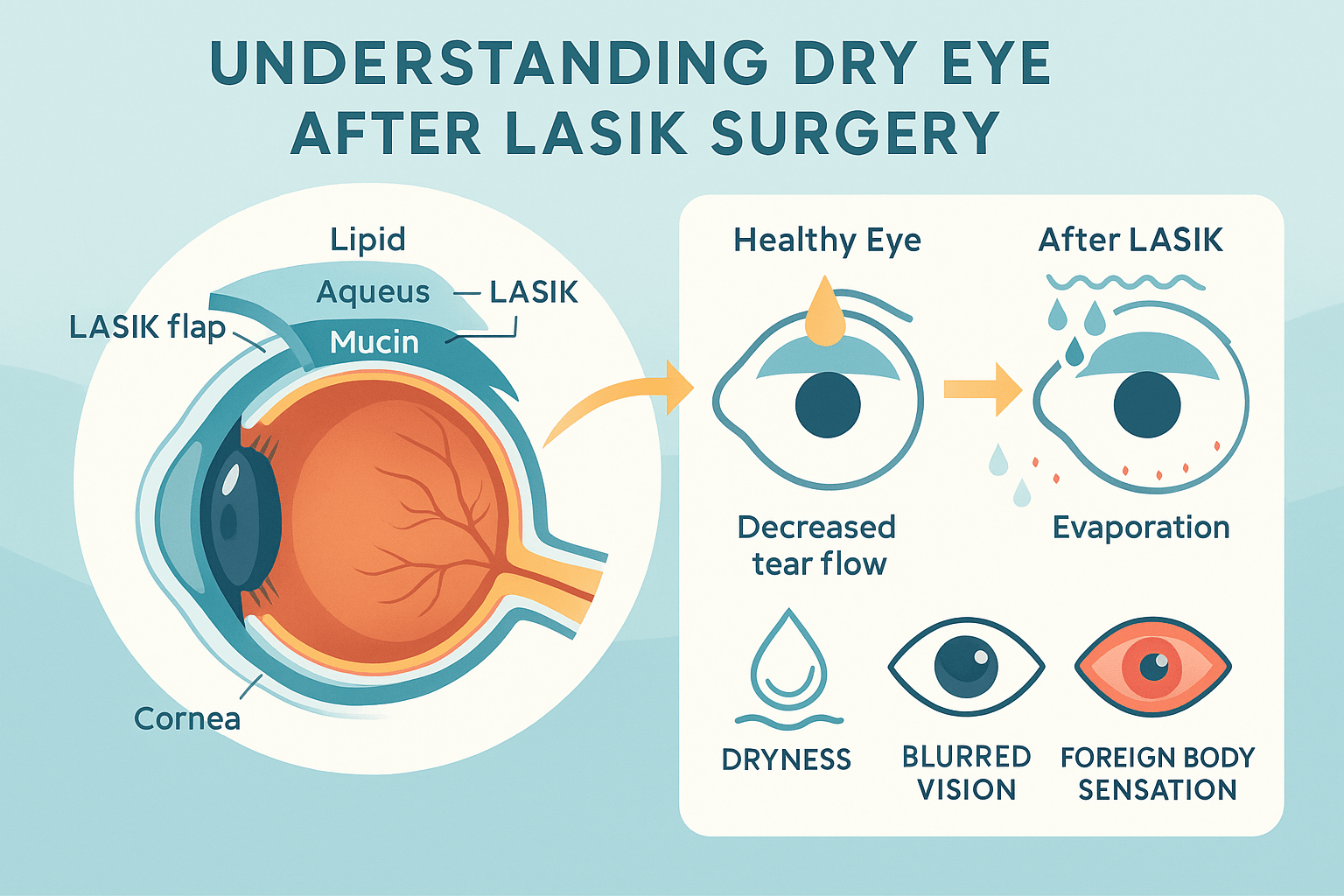
LASIK reshapes the cornea to improve vision. During the procedure, the corneal nerve pathways can be temporarily affected. These nerves help the eye sense dryness and signal when more tears are needed. While they recover, the eye may not respond as quickly as usual, which can lead to dry eye symptoms.
The tear film also plays an important role. A healthy tear film has three main layers: oil, water and mucus. Together, they keep the surface smooth, comfortable and clear. If this balance is disrupted after surgery, tears may evaporate too quickly or fail to spread evenly across the eye. This can cause blurred or fluctuating vision, especially later in the day.
Dryness after laser eye surgery does not always mean the eye is failing to heal. In many cases, it is a temporary side effect of the procedure and the body’s recovery process. Symptoms usually quickly improve as sensitivity returns and the tear film becomes more stable.
Some patients are more likely to experience dry eye than others.
Risk factors can include:
- pre-existing dry eye
- contact lens intolerance
- long hours on screens
- certain medications
- hormonal changes
- dry working environments
A careful pre-surgery assessment helps identify these issues before treatment and allows the surgeon to plan suitable care.
Dry Eye Signs Your Eyes May Be Too Dry after Surgery
Dry eye does not feel the same for every patient. Some people notice mild irritation, while others describe burning, watering or a gritty feeling. Because symptoms can change throughout the day, it helps to know what to look for.
| Symptom | What it may feel like | What may help |
| Grittiness | A sandy or scratchy feeling when blinking | Lubricating eye drops and avoiding eye rubbing |
| Burning or stinging | Irritation that worsens in wind, air conditioning or dry rooms | Humidity, sunglasses and regular drops |
| Blurred vision | Vision that clears after blinking, then becomes hazy again | Tear support and screen breaks |
| Watery eyes | Reflex tearing that does not relieve dryness | Treating the underlying dry eye, not just wiping tears away |
| Light sensitivity | Discomfort in bright light or glare | Sunglasses and follow-up advice |
| Tired eyes | Eye fatigue during reading, screen use or driving | Rest breaks and good blinking habits |
These eye symptoms are often most noticeable during focused tasks. When reading, driving or using a laptop, people blink less often. This gives tears more time to evaporate and can make dryness worse.
It is also common for eyes to feel different from one another. One eye may feel drier, blurrier or more sensitive than the other. This does not always mean there is a problem, but it should be mentioned at a follow-up appointment.
Contact your eye doctor promptly if pain is increasing, vision is worsening, redness is severe, discharge develops or dryness is not improving with the aftercare plan you were given. Persistent symptoms deserve proper assessment, especially if they affect daily life.
How to Treat Dry Eyes with Lubricating Eye Drops
Lubricating eye drops are often the first step in treating dry eyes after LASIK. They help replace moisture, protect the surface and reduce friction when blinking. Many patients are advised to use them regularly during the early recovery period, even before the eyes feel very dry.
There are many different lubricating eye drops available. Some are light and watery, while others are thicker and last longer. Preservative-free drops are often preferred after surgery because they are gentler when used several times a day. Gels or ointments may be suggested for night-time dryness, although they can blur vision for a short while after use.
Avoid using redness-relief drops unless your surgeon or optometrist recommends them. These products can irritate the eye surface and may not treat the dryness causing the problem.
A simple treatment plan may include:
- Preservative-free lubricating drops during the day, used as directed.
- Night-time gel or ointment if waking with dry, sticky or uncomfortable eyes.
- Warm moist compresses to support the oil glands in the eyelids.
- Gentle lid massage if advised, especially where oil gland function is poor.
- Lid scrubs or wipes if eyelid inflammation is contributing to dryness.
Warm moist compresses can be useful when the oily part of the tear film is not working well. Heat helps soften the oils in the meibomian glands along the eyelids. Gentle lid massage can then help those oils spread across the eye surface, reducing tear evaporation.
Some patients need further treatment. This may include anti-inflammatory drops, punctal plugs or tailored dry eye therapy. These options should only be used under professional guidance.
Anderson Eye Care’s approach is particularly suited to patients who want joined-up care, with assessment, surgery and post-operative follow-up led by an experienced eye specialist.
Daily Habits That Help Prevent Dry Eyes
Good aftercare is not limited to eye drops. Small changes to daily routine can make recovery more comfortable and help prevent dryness from becoming disruptive.
Screen use is one of the main triggers after surgery. When concentrating, blink rate falls and tears evaporate faster. The 20 20 rule can help: every 20 minutes, look at something around 20 feet away for 20 seconds. This gives the eyes a break and encourages more natural blinking.
Your environment also matters. Air conditioning, central heating, fans and wind can all dry the eye surface. A humidifier can be useful in a bedroom or home office, especially during colder months when indoor air is dry. When outdoors, wraparound sunglasses can protect the eyes from wind, dust and bright light.
Patients should also follow practical aftercare steps:
- Use drops exactly as recommended, rather than waiting until the eyes feel uncomfortable.
- Avoid rubbing the eyes, as this can irritate the healing surface.
- Stay well hydrated throughout the day.
- Take breaks from screens, reading and close work.
- Avoid smoky or dusty environments where possible.
- Attend all follow-up appointments, even if vision feels good.
- Ask before returning to contact lens wear, swimming or eye make-up.
Good nutrition can also support eye health. Omega-3 fats from oily fish, nuts and seeds may help support tear quality for some people. Supplements are not suitable for everyone, so it is best to ask for advice if you take medication or have a medical condition.
How Long Dry Eyes May Last after Laser Eye Surgery
Dryness after laser eye surgery is usually temporary. Many patients notice symptoms during the first few days or weeks, then gradual improvement as healing progresses. For some, dry eye may last several months, especially if they had dryness before treatment.
Dry eyes after LASIK 1 year later are less common, but they can happen. Long-term symptoms are more likely when dry eye disease was already present, when screen exposure is high or when eyelid gland problems are not treated. This is why pre-surgery screening and aftercare are so important. Age, prescription stability and eye health all matter when assessing whether laser treatment is appropriate.
Patients often worry about permanent dry eyes after LASIK. While lasting dryness is possible, it is not the usual outcome. The aim of good assessment is to reduce risk before surgery and manage symptoms early if they appear. If dryness continues, specialist treatment can often improve comfort and vision stability.
Dry eyes after LASIK causing blurry vision can be frustrating because the quality of sight may change through the day. Vision may be sharp in the morning, then blur during screen work or in dry air. This usually reflects an unstable tear film rather than a change in the surgical result. Treating the tear film often improves clarity.
It is important not to stop lubricating the eyes too soon. If you do not lubricate your eyes after LASIK when advised, the surface can become more irritated. This may increase discomfort, slow recovery and make vision fluctuate. Eye drops do not replace follow-up care, but they are an easy way to protect comfort while healing continues.
When to Speak to a Specialist About Dry Eyes
Most mild dryness can be managed with routine aftercare. However, specialist advice is needed if symptoms are severe, one-sided, worsening or not settling. You should also seek help if dry eye is affecting work, driving, sleep or confidence in your vision.
Anderson Eye Care is well placed for patients who want reassurance before or after laser eye surgery. Consultations are designed to assess suitability, identify risk factors and explain what recovery may involve. For people with existing dry eye, this discussion is especially important. It may influence the type of laser procedure recommended, the timing of treatment or the aftercare plan.
A specialist assessment may look at tear quality, eyelid health, corneal surface condition and how stable the tear film is between blinks. This helps separate normal post-surgery dryness from dry eye disease that needs ongoing treatment.
If you are considering laser eye surgery and already experience dry eye, grittiness, contact lens discomfort or variable vision, raise this before treatment.
If you have already had surgery and symptoms are continuing, do not wait for them to become harder to manage.
Book a consultation with Anderson Eye Care to discuss dry eye symptoms, or arrange a free laser eye surgery screening to find out whether treatment is suitable for you.